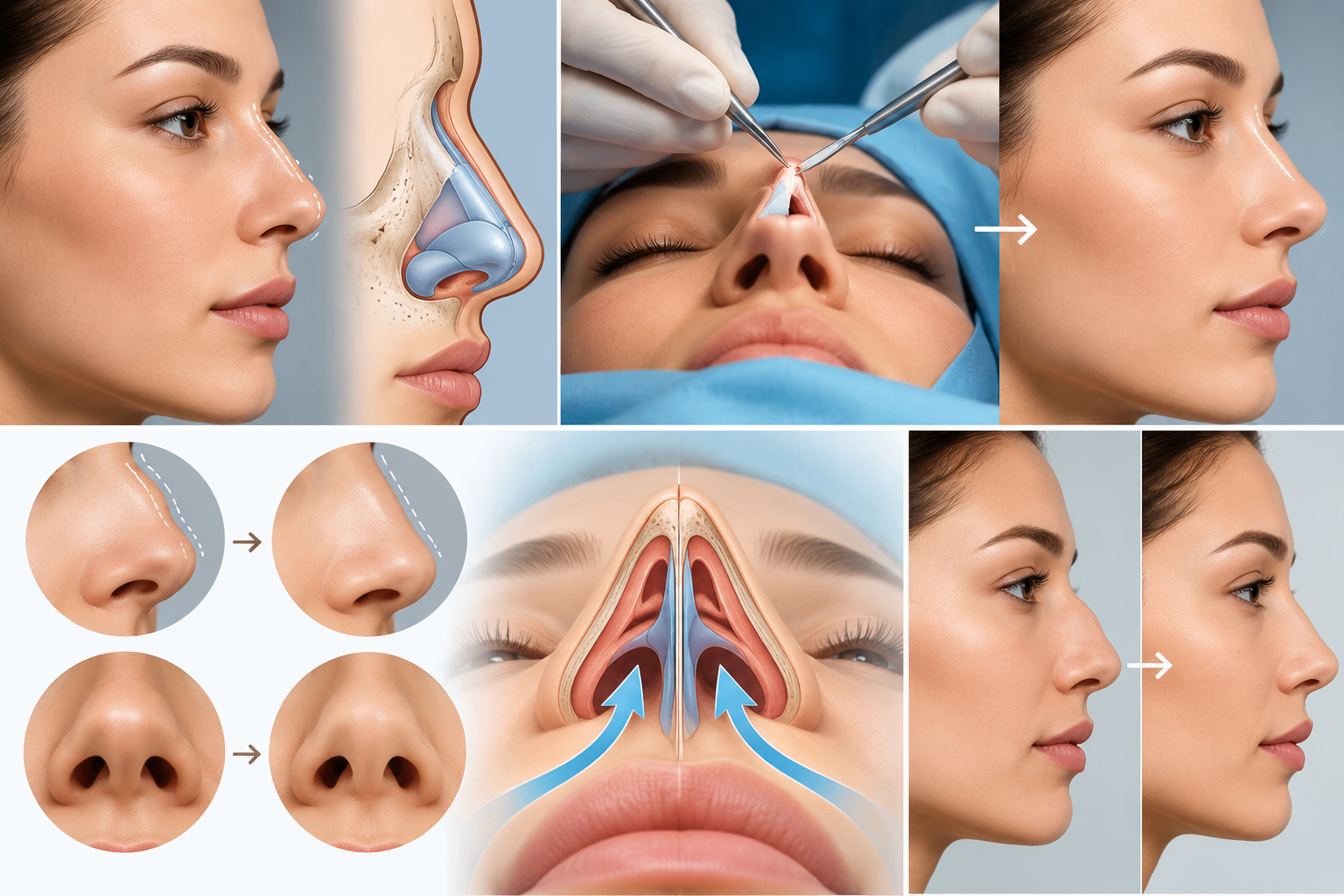
Rhinoplasty is a surgical procedure performed to change the external appearance of the nose and, when necessary, improve its functions. It is commonly known as nose surgery or nose aesthetics.
Since the nose is located at the center of the face, it plays an important role in overall facial appearance. A prominent nasal hump, a drooping or wide nasal tip, nasal deviation, or an imbalance between the nose and the face can be addressed through rhinoplasty.
For some patients, rhinoplasty is not performed solely for aesthetic purposes. In people who have difficulty breathing due to nasal bone deviation or structural problems inside the nose, functional improvement may also be targeted depending on the surgical plan.
Who Is Suitable for Rhinoplasty?
People who are dissatisfied with the shape or structure of their nose and whose general health is suitable for surgery may be candidates for rhinoplasty.
Situations in which rhinoplasty may be considered include:
A prominent nasal hump
A drooping, wide, or asymmetrical nasal tip
Dissatisfaction with the shape or size of the nostrils
Nasal deviation
Disproportion between the nose and face
Deformities caused by previous trauma
Breathing problems related to certain structural conditions
However, the appropriate technique and surgical plan are different for each patient. Therefore, a detailed evaluation by a plastic surgeon is important before surgery.
How Is Rhinoplasty Performed?
Rhinoplasty can be performed using different techniques depending on the patient's nasal structure and the desired outcome. The surgeon evaluates the nasal bones, cartilage, skin structure, and facial proportions together before determining the appropriate approach.
During the procedure, necessary changes may be made to the nasal bones and cartilage. The nasal bridge can be reshaped, the nasal tip can be refined, and structural problems inside the nose can be addressed when necessary.
The duration of the operation may vary depending on the scope of the procedure.
Recovery After Rhinoplasty
Swelling and bruising around the nose may occur after surgery. In particular, swelling around the nose may be noticeable during the first few days.
Following the doctor's recommendations during the recovery period is important. Patients may need to avoid trauma to the nose, limit strenuous physical activity for a certain period, and attend regular follow-up appointments.
Changes in the appearance of the nose become more noticeable over time. Complete reduction of swelling and the appearance of the final nasal shape may take several months and vary from person to person.
What Should Be Considered Before Rhinoplasty?
Before surgery, it is important for patients to clearly discuss their expectations with their surgeon. The nasal structure, facial proportions, and skin characteristics should be evaluated to create a realistic surgical plan.
Patients should inform their doctor about medications they use, existing health conditions, previous surgeries, and any nasal complaints.
Rhinoplasty should not be considered merely as a procedure that changes the appearance of the nose in photographs. Facial harmony and achieving a natural-looking result are also important parts of surgical planning.
When Can the Results of Rhinoplasty Be Seen?
Immediately after surgery, swelling may prevent the final result from being fully visible. As healing progresses, the shape of the nose becomes clearer.
The time required for the final result to become apparent depends on many factors, including the surgical technique used, individual healing characteristics, skin structure, and the extent of the procedure.
Therefore, it is not appropriate to guarantee that a definitive result will be achieved on a specific date before surgery.
Is Rhinoplasty Safe?
Rhinoplasty is a commonly performed surgical procedure when carried out by an experienced surgeon in appropriate hospital conditions. However, like any surgical procedure, rhinoplasty carries potential risks, including bleeding, infection, healing problems, asymmetry, or unexpected aesthetic results.
For this reason, before deciding on surgery, patients should discuss the potential benefits, risks, alternatives, and recovery process in detail with their doctor.
Conclusion
Rhinoplasty is a surgical procedure that can aim not only to change the appearance of the nose but also to create a nose that is more harmonious with the face and, in suitable patients, address functional problems.
People considering rhinoplasty should first be evaluated by a qualified surgeon, clearly communicate their expectations, and determine the most appropriate surgical approach together with their doctor.
Please note: Every patient's nasal structure and needs are different. Therefore, general information available online does not replace a personal medical evaluation.
Related Articles

How to Choose a Hospital for Cosmetic Surgery in Turkey?
For patients planning cosmetic surgery in Turkey, choosing a hospital requires evaluating several factors together, including the surgeon’s experience, the hospital’s technical infrastructure, healthcare tourism capabilities, and postoperative care.

Why Is Turkey Preferred for Dental Treatment in Health Tourism?
Turkey is one of the countries preferred by patients from different parts of the world for dental treatment, thanks to its modern dental clinics, experienced healthcare professionals, wide range of treatment options, and healthcare services designed for international patients.